Reducing CTE of Thermosets
Intro
Ultra quick primer, coefficient of thermal expansion (CTE) describes how much a material changes in size relative to changes in temperature. Thermosets are often designed with specific CTE values based on their intended application, if such characteristic is ignored then (premature) failure may occur.
As a practical example let's say one wanted to bond two aluminum panels together, aluminum has a CTE of ~23.6 ppm/°C (1), an unfilled B-stage epoxy adhesive may have a CTE between 30 and 70 ppm/°C (when below Tg) (2), and cure schedule for the film adhesive may require say 150°C for several hours. Once curing is complete and the aluminum panels and adhesive layer cool back down to room temperature internal stresses form in the bond line due to the adhesive contracting more than the aluminum (CTE mismatch).
Depending on the bond line thickness, elastic modulus of adhesive, service temperature, thermal cycling, and so forth, these internal stresses may be relieved, insignificant, or eventually cause delamination at the interface, cohesive failure in the bulk adhesive region, or combination thereof.
So what are the primary levers available to formulators when optimizing CTE of thermoset materials? Tg, crosslink density, and inorganic filler.
Tg & Crosslink Density
When plastics are heated above their glass transition temperature (Tg), they transition from a glassy to rubbery state resulting in substantial increases in thermal expansion. This is seen quite easily in Figure 1 (3), can you guess the Tg? For this reason CTE is often measured below the Tg of the material as α₁ and above the Tg known as α₂. α₂/α₁ ratio can be used as an indicator to how sudden a material will thermally expand nearing its Tg.
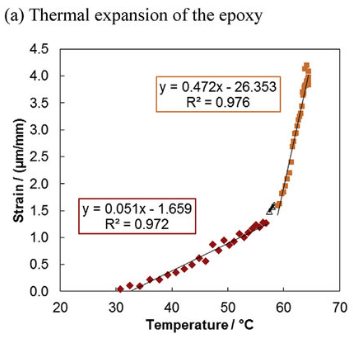
In order to counter this rapid increase in thermal expansion (and improve other properties such as creep resistance) it's advantageous to design a thermoset with rigid, bulky, sterically-hindered raw materials which restrict polymer chain movement and raise the Tg and upper working temperature limit of the material. This approach as well as the remaining to be described must always be balanced against other physical and mechanical properties that are bound to shift--such is the life of formulating.
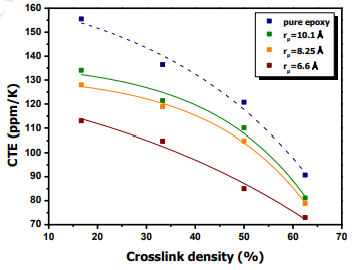
Using monomers and oligomers with high functionality when sufficiently cured will exhibit higher crosslink density restricting polymer chain and segmental mobility (higher Tg) and reduced CTE. Such can be seen in Figure 2 below (4). α₂/α₁ ratios are also reduced.
Incorporation of Fillers
The most effective way to reduce CTE is through the incorporation of inorganic fillers, silica for instance has a CTE of 0.55-0.75 ppm/°C (5), alumina 6-8 ppm/°C (6, 7), versus unfilled epoxies varying approximately 30-70 ppm/°C.
Particle size, morphology, and surface functionalization of filler will further influence CTE. In Figure 3 below ~5% by wt. 4.83 μm spherical silica addition to an epoxy resin reduced CTE by ~10% while ~5% by wt. addition of 7nm fumed silica reduced CTE by ~85% (8).
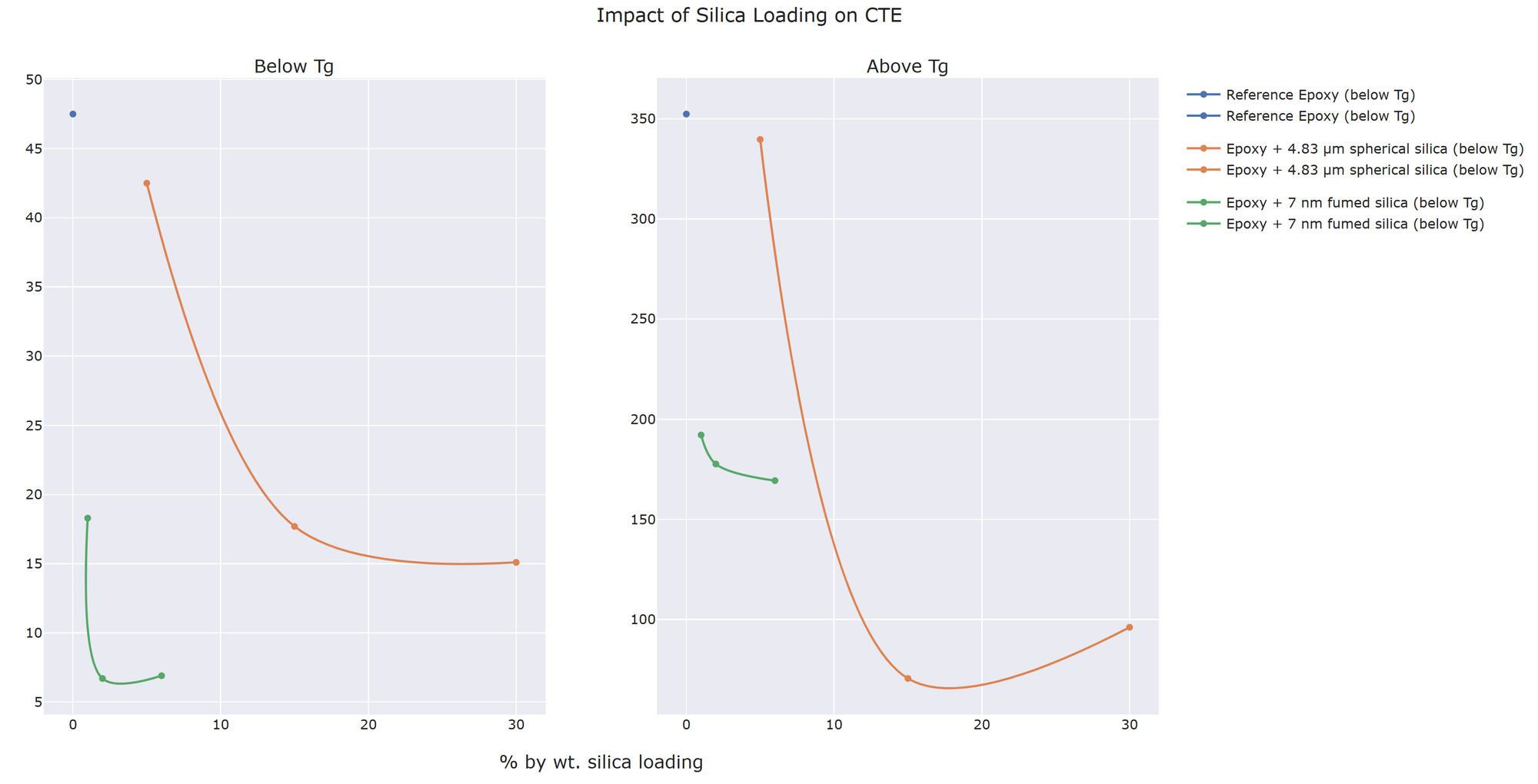
Unfilled epoxies can exhibit a ~3-7x increase in CTE when exposed to temperatures above their Tg. In Table 1 below this particular unfilled reference epoxy exhibits a 7.4x increase, interestingly, the addition of spherical silica maintains a similar α₂/α₁ ratio, and in some cases, reduces it (9). In contrast, the addition of fumed silica results in a higher α₂/α₁ ratio than the unfilled epoxy.
Despite the higher α₂/α₁ ratio observed with fumed silica, the absolute CTE above Tg still remains lower than that of the unfilled reference epoxy above its Tg, as shown in the right-hand plot of Figure 3.
| Sample | α₂ / α₁ |
|---|---|
| Reference Epoxy | 7.4 |
| Epoxy + 5% 4.83 μm spherical silica | 8.0 |
| Epoxy + 15% 4.83 μm spherical silica | 3.9 |
| Epoxy + 30% 4.83 μm spherical silica | 6.4 |
| Epoxy + 1% 7 nm fumed silica | 10 |
| Epoxy + 2% 7 nm fumed silica | 26 |
| Epoxy + 6% 7 nm fumed silica | 24 |
Surface Functionalization
Modifying surface of silica can further reduce CTE by improving interfacial bonding and increasing crosslink density. In study by Sipaut, Coswald, et al. silica filled bismaleimide–diamine formulations exhibited 21% reduction in CTE when silica surface was functionalized with epoxy or maleimide groups versus unfunctionalized hydroxyl surface (10).
| Material | CTE α₁ (ppm/C) |
|---|---|
| BMI/DDM + 5% by wt. 7nm silica | 45 |
| BMI/DDM + 5% by wt. 7nm silica with epoxy functionalization | 35 |
| BMI/DDM + 5% by wt. 7nm silica with maleimide functionalization | 36 |
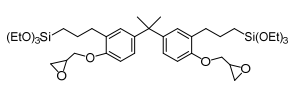
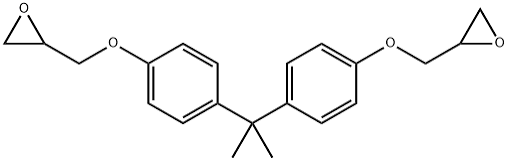
In another example, a triethoxysilyl-modified BPA epoxy was filled with 85 wt% 15 μm silica, epoxy portion underwent homopolymerization catalyzed by 2-phenylimidazole (2-PI), while the triethoxysilyl groups reacted with hydroxyl groups on the silica surface as well as epoxy groups within the resin (11). These additional covalent bonds increased crosslink density and interfacial bonding, resulting in CTE values as low as 3.2 ppm/°C below Tg and 6.0 ppm/°C above Tg.
For comparison a DGEBA epoxy homopolymerized with the same 85 wt% silica loading, but no additional crosslinking or covalent bonding to the silica surface exhibited a CTE of 8.0 ppm/°C below Tg and 40.0 ppm/°C above Tg.
| Material | CTE α₁ (ppm/C) | CTE α₂ (ppm/C) | α₂/α₁ |
|---|---|---|---|
| SiOEt-BPA | 52 | 90 | 1.7 |
| DGEBA | 61 | 181 | 3.0 |
| SiOEt-BPA + 85% by wt. silica | 3.2 | 6.0 | 1.9 |
| DGEBA + 85% by wt. silica | 8.0 | 40.0 | 5.0 |
It's worth noting silica is not the only filler option, boron nitride (spherical or hexagonal) and alumina may be considered, especially if thermal conductivity is needed.
Bimodal Particle Packing
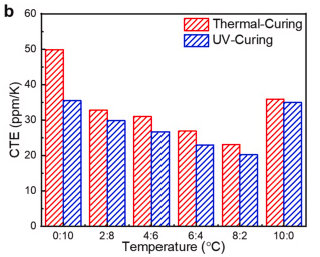
Leveraging two different sized filler particles may be used for achieving higher packing density and further CTE reduction over single particle type.
Cycloaliphatic epoxy-silane compositions loaded with 90% by wt. alumina with varying size: 2 μm alumina, 45 μm alumina, and ratio: 0:10 to 10:0 (45 μm alumina:2 μm alumina) were cured under UV and thermal conditions then CTE measured. UV-cured samples with either 90% by wt. 45 μm alumina or 2 μm alumina yielded CTE of ~35 ppm/K, however 8:2 ratio of 45 μm alumina:2 μm alumina, or 72% 45 μm alumina and 18% 2 μm alumina yielded CTE of ~22 ppm/K, or ~37% decrease by increased packing density (12).
NTE
Negative Thermal Expansion fillers (NTE) are less common and under active development, but as the name implies contract when heated and partially offset expansion from traditional epoxy or acrylate systems, CTE values typically range between -1 to -2 ppm/K (13,14)
Mitsubishi Chemical Corporation
Thermally Induced Isomerization
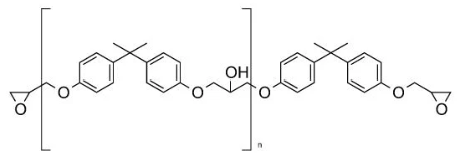
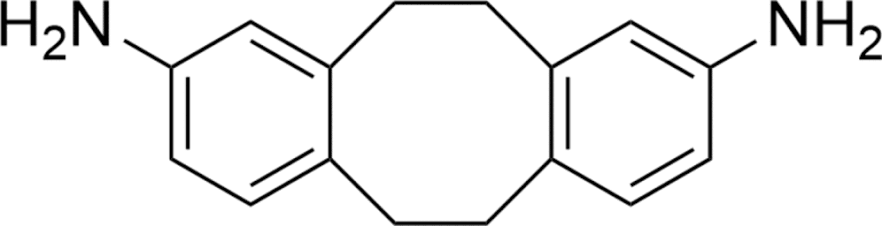
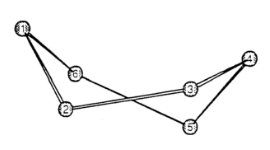
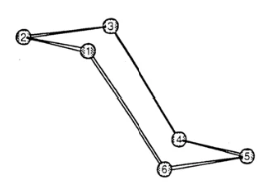
More novel approaches are being explored through the incorporation of moieties into polymer backbones that undergo thermally induced isomerization and free volume reduction. For example, cis-DADBCO used as a curing agent with Epon 828 undergoes a conformational transition from a twist-boat to a chair configuration at approximately 150°C. This transition reduces free volume and results in a CTE of approximately 20 ppm/°C compared to ~60 ppm/°C for control formulations cured with trans-DADBCO or EDA diamine (15).
As with most optimization efforts, addressing CTE will typically require a combination of several approaches to achieve the desired target and maintain balance with other physical and mechanical property requirements.
References
- https://us.misumi-ec.com/blog/thermal-expansion-coefficients/
- https://www.kohesibond.com/epoxy-potting-compounds-physical-properties/
- Evaluation of in-situ shrinkage and expansion properties of polymer composite materials for adhesive anchor systems by a novel approach based on digital image correlation - Scientific Figure on ResearchGate. Available from: https://www.researchgate.net/figure/Thermal-expansion-of-epoxy-a-and-vinylester-b-in-two-different-ranges-The-first_fig7_335063007
- Kim, Byungjo, et al. "Influence of crosslink density on the interfacial characteristics of epoxy nanocomposites." Polymer 60 (2015): 186-197.
- https://www.azom.com/properties.aspx?ArticleID=1114
- https://www.engineeringtoolbox.com/linear-expansion-coefficients-d_95.html#gsc.tab=0
- https://www.bstceramicpcb.com/news/industry-knowledge/96-alumina-cte-what-is-the-thermal-expansion-coefficient-of-alumina.html
- https://www.researchgate.net/publication/232411526_Properties_of_Spin_Coated_EpoxySilica_Thin_Film_Composites_Effect_of_Nano-_and_Micron-Size_Fillers
- Foo, Evon, et al. "Properties of spin coated epoxy/silica thin film composites: Effect of nano-and micron-size fillers." Composites Part A: Applied Science and Manufacturing 42.10 (2011): 1432-1437.
- Sipaut, Coswald S., et al. "The effect of surface modification of silica nanoparticles on the morphological and mechanical properties of bismaleimide/diamine matrices." Advances in Polymer Technology 34.2 (2015).
- Chun H, Kim Y-J, Tak S-Y, Park S-Y, Park S-J, Oh CH, Preparation of ultralow CTE epoxy composite using the new alkoxysilyl-functionalized bisphenol A epoxy resin, Polymer (2017), doi: 10.1016/j.polymer.2017.11.048
- Kim, Chan Soo, et al. "Preparation and performance of alumina/epoxy-siloxane composites: A comparative study on thermal-and photo-curing process." Heliyon 10.5 (2024).
- https://www.neg.co.jp/en/products/negative-cte/index.html
- https://www.toagosei.co.jp/english/products/performance_chemicals/amenity/ultea/index.html
- Foster, Jeffrey C., et al. "Tuning Epoxy Thermomechanics via Thermal Isomerization: A Route to Negative Coefficient of Thermal Expansion Materials." ACS Macro Letters 10.7 (2021): 940-944.