Improving Fracture Toughness of Thermosets With Core Shell Rubbers & Silica
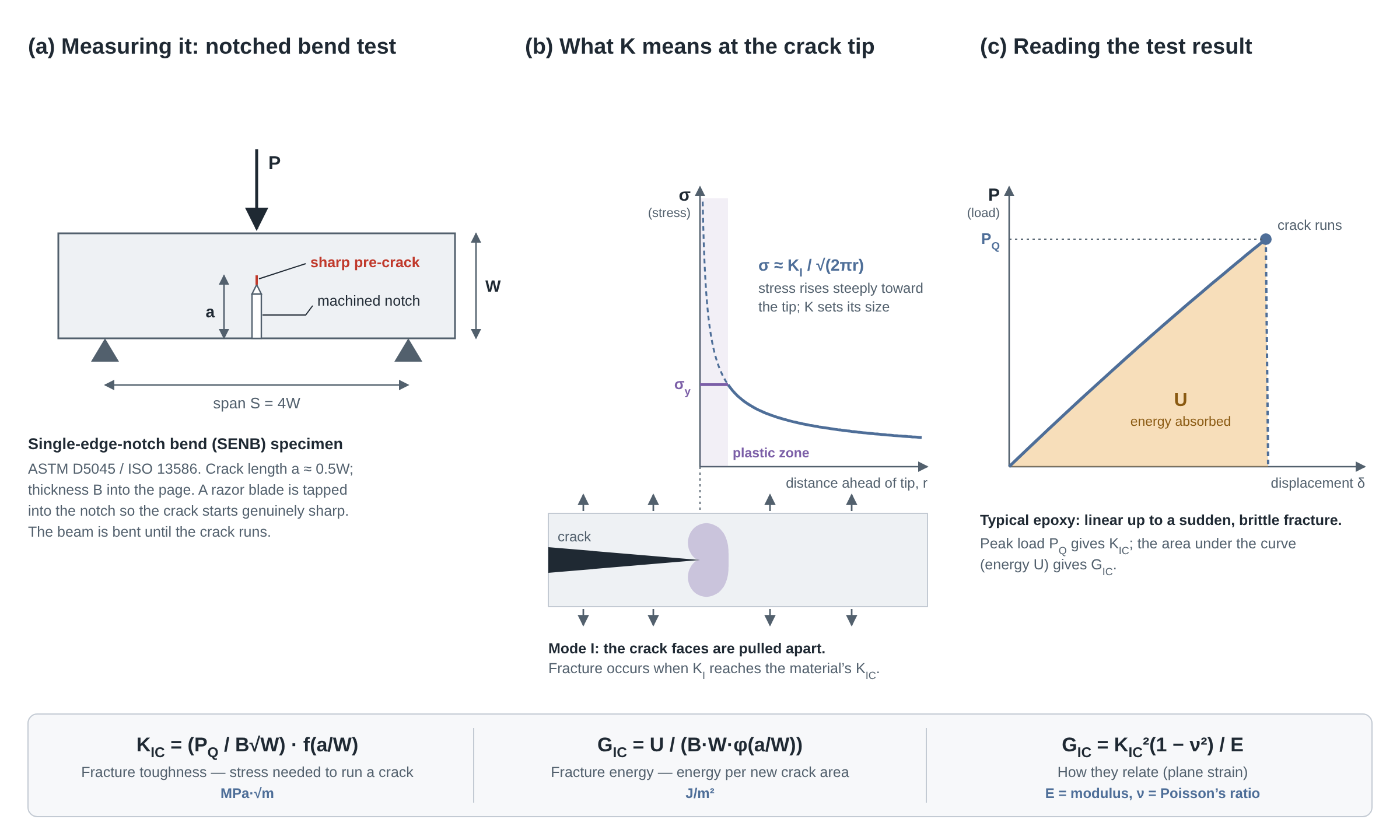
Both core-shell rubbers and silicas are known for imparting large improvements to fracture toughness in thermoset materials.
Core shell rubbers as the name implies have a rubber core surrounded by hard shell, eg: acrylic-butadiene rubber core, PMMA shell, and toughen by two primary mechanisms: localized shear banding of the matrix and plastic void growth.
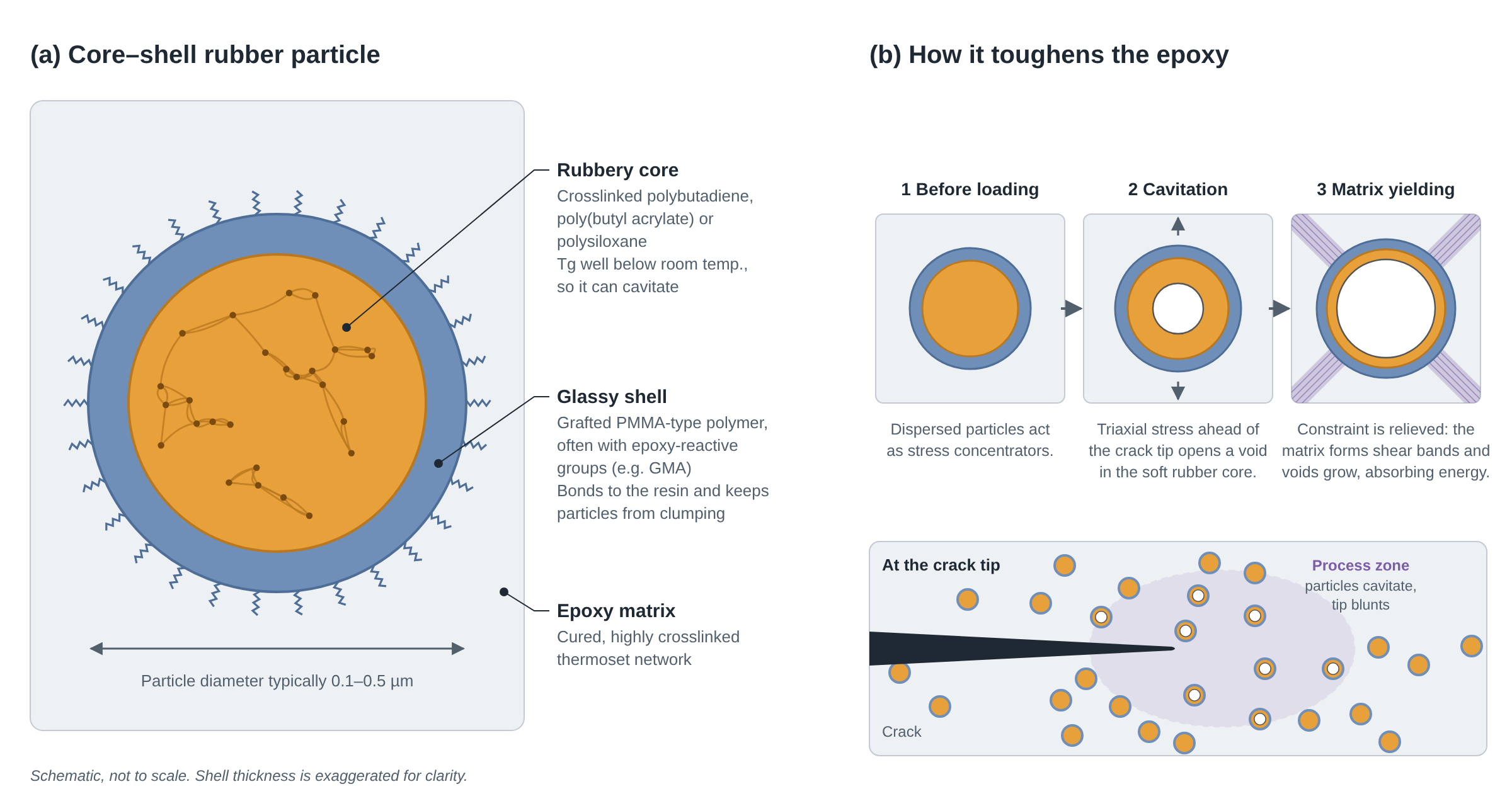
Common starting points for CSR tend to be 75-300 nm diameter and 5-30% by wt. loadings with minimal impact to Tg--storage modulus will decrease however. One thing to keep in mind is the service temperature and degree of toughness needed at various temperatures for the intended material. For CSR to efficiently toughen the service temperature must be above the core Tg, eg: CSR with polysiloxane rubber core with Tg -114C may be beneficial over say CSR with styrene-butadiene rubber core with -46C Tg if priority is given to toughening at -60C (1)
Unlike core shell rubber, which typically reduce modulus, silica fillers can simultaneously increase modulus, K1c, and G1c. Tg is generally minimally affected, CTE largely reduced. Toughness is generally less impacted by temperature, especially at cryogenic temperatures. Particle sizes typically range from 20 nm to 75 microns with weight loadings from 5% to 60% by wt. Incorporating two particle sizes (bimodal packing) can improve packing density and yield greater improvements to both K1c, G1c, and CTE over single particle size at equivalent weight loadings. (2)
References
- Chen, J., et al. "The mechanical properties and toughening mechanisms of an epoxy polymer modified with polysiloxane-based core-shell particles." Polymer 54.16 (2013): 4276-4289.
- Raja Othman, Raja Nor, et al. "Synergistic fracture toughening in epoxy composites with hybrid micro-and nano-silica: a new dual-mechanism model approach." Journal of Materials Science 60.44 (2025): 22064-22086.